If you have difficulties viewing this email, please view online |
April 2012 |
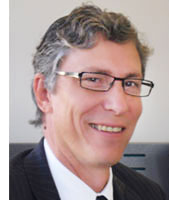 I know you are well aware of the vision for eHealth in New Zealand. I know you are well aware of the vision for eHealth in New Zealand.But have you ever looked ahead to 2014 and wondered what this ‘core set of personal health information available electronically’ might actually look like on screen? Or what it might be called? Or how it could improve your health and well being? We've been busy thinking about all these things. The National Health IT Board, and our clinicians, reached the conclusion in 2010 that the term 'electronic health records' is not a helpful description. If you think about it, an electronic health record sounds like something an IT professional is going to provide you with – something that just ‘turns up’. As well, an electronic health record (if you've ever seen one) is not particularly interesting. You look at the screen and see an historical view of your data. The really exciting part is how you can use your data – and that's where we're heading with integrated care. We want something that uses the power of the internet – with great security and privacy settings – which shows how your care team is working with you and your family to get the best outcome. What we want is a plan with an outcome statement that is person-centred, and we want to be able to measure the delivery of the outcome against the plan. Shared care plans are more than just historical data sets, they are an active process of creating health outcomes. Something else I’ve been thinking about is the vital importance of standards. In this issue of the newsletter there is a focus on the HISO standards activity underway. Kathy Farndon provides updates on a number of standards, and we also take a look at the benefits of developing standards. On a more personal note, I'm pleased to have been appointed as the Director, Information Group in the Ministry of Health's National Health Board Business Unit, after acting in the role since October last year. My new role blends significant internal responsibilities for the Ministry's IT systems with my previous external focus as Director of the National Health IT Board. I believe the synergy this generates will benefit both the Ministry and sector. We'll be setting a common direction through an IT Implementation Plan for the Ministry of Health, in the context of the National Health IT Plan, that tightly integrates with the objectives of the Ministry and the sector. Graeme Osborne Director National Health IT Board
|
|
||||||||||||||||||||||||||||||||||||||||
"Nurses are the glue in the health system. It is nurses who help join the dots for people who are trying to find their way through a complex system and they have the time to help people navigate, especially people with very complex conditions. “In this role, I'm also made really aware of how IT connectivity can help and support clinicians and patients and be a real time-saver." When you’re making clinical decisions at the interface, having access to a really good history is critical, she says. Clinicians in an acute situation in ED, with a person who is confused or traumatised, have no way of knowing the patient’s primary care history. "They can order needless investigations or prescribe medication without knowing the full picture.” At Capital & Coast DHB they've had some success with integration, she says, with a number of shared roles across services. "There's also a lot of interest in technology that can support better understanding of patients and their history, and the potential of shared care records. It has been very exciting to hear about the work in Auckland with people with long-term conditions, and in Canterbury, particularly after the earthquake." A challenge she faces, along with other NICLG members, is taking the message back to her constituency groups and peers. |
|||||||||||||||||||||||||||||||||||||||||
| "How do I keep my fellow professionals in touch? National IT development will deliver great benefits – the system will be much more effective, much safer and more efficient. But it's very hard to share some of the learnings and experience – it's a challenge."
Like many successful people, Vicky has also struggled with that elusive work-life balance. "I've found that I'm most relaxed when I'm creating something or doing something and I love cooking. I have a garden that I try to keep really beautiful and I also read, watch movies and spend time with family." For more about NICLG, see the group's April Update. Hospitals Go for Gold 
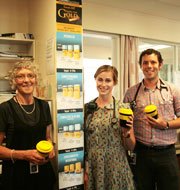
It’s not just New Zealand Olympians who are going for gold this year – district health boards are also aiming for the top when it comes to medication management. The new Go for Gold programme encourages DHBs to achieve ‘gold’ level medication management by the end of 2014 and hopes to have 100 percent of public hospitals participating in the electronic medicines management programme from 2012. Medication errors and adverse drug events affect an unacceptable number of New Zealanders each year, with some resulting in permanent disabilities or death. “Our programme is introducing electronic systems to support the safe, effective and appropriate use of medicines,” says eMedicines Programme Lead Shayne Hunter. The programme is jointly sponsored by the Health Quality & Safety Commission, and the National Health Board/ National Health IT Board. A gold-level hospital would have electronic prescribing and administration (ePA) and electronic medicines reconciliation (eMR). To support change, the eMedicines Programme is undertaking a ‘readiness assessment’ to understand where each DHB is at now and help them plan their implementation. “We’re rolling out electronic medications management in public hospitals in four phases and we’re just getting phase two underway. It’s going really well and I’d like to thank all the DHBs taking part for their enthusiasm and commitment,” says Shayne Hunter. Electronic prescribing and administration is now in a further sevens wards at Southern DHB and will go live in three wards at Taranaki DHB and two wards at Waitemata DHB later this year. eMR has been expanded at Counties Manukau, Waitemata and Taranaki DHBs and is expected to go live in Auckland DHB and one other DHB later this year. Meanwhile, work to support the national rollout of the New Zealand Electronic Prescription Service (NZePS) continues. NZePS lets GPs send prescriptions to community pharmacies electronically. In future, prescriptions given to people discharged from hospital or who attended a hospital outpatient clinic will also be sent via the service. What is electronic medicines reconciliation? eMR captures a patient’s medication history from three or more sources, then matches it to their medicines on admission and electronically records any differences. Doctors then try to reconcile these differences. When the patient is discharged, the medicines on the admission list are reviewed to include any changes during admission and a summary is sent to the patient’s GP. |
|||||||||||||||||||||||||||||||||||||||||
 |
|||||||||||||||||||||||||||||||||||||||||
|
METeOR update HISO has agreed that only core patient/provider demographics will be inputted into METeOR in phase one of the project. METeOR is a meta-data electronic online repository that will be used in many National Health IT Board projects. Focusing on specific data requirements in phase one will enable us to provide better training and back up for other users before national rollout is considered. Phase two will focus on other demographic requirements, and the collation of clinical requirements. PRIMHD review update Part two of the Programme for the Integration of Mental Health Data (PRIMHD) review is underway. A small working group met in March to start developing the requirements that were raised in the PRIMHD Review Recommendation Report published late last year. Health Information Exchange Architecture Building Blocks update The Health Information Exchange Architecture Building Blocks suite of documents which have been developed by the Sector Architects Group, were published on the HISO website site in early April. |
|||||||||||||||||||||||||||||||||||||||||
 Clinician’s Corner –
 The benefits of developing HISO standards
  |
||||||||||
|